I am learning flutter from JustAcademy, They provide very much great environment where people gather and work simultaneously. totally project based training institute.
MOHD ABU BAKAR ANSARI
Flutter Developer
Awesome Experience. I am a Front-end Web Designer working at Star India for 3 years now. I applied for Full-stack development and my experience has been phenomenal & they really do help with placements exceptionally. Thank you Roshan sir so much.
A practical, mentor backed guide for Hyderabad learners who want a portfolio that gets opened, remembered and shortlisted
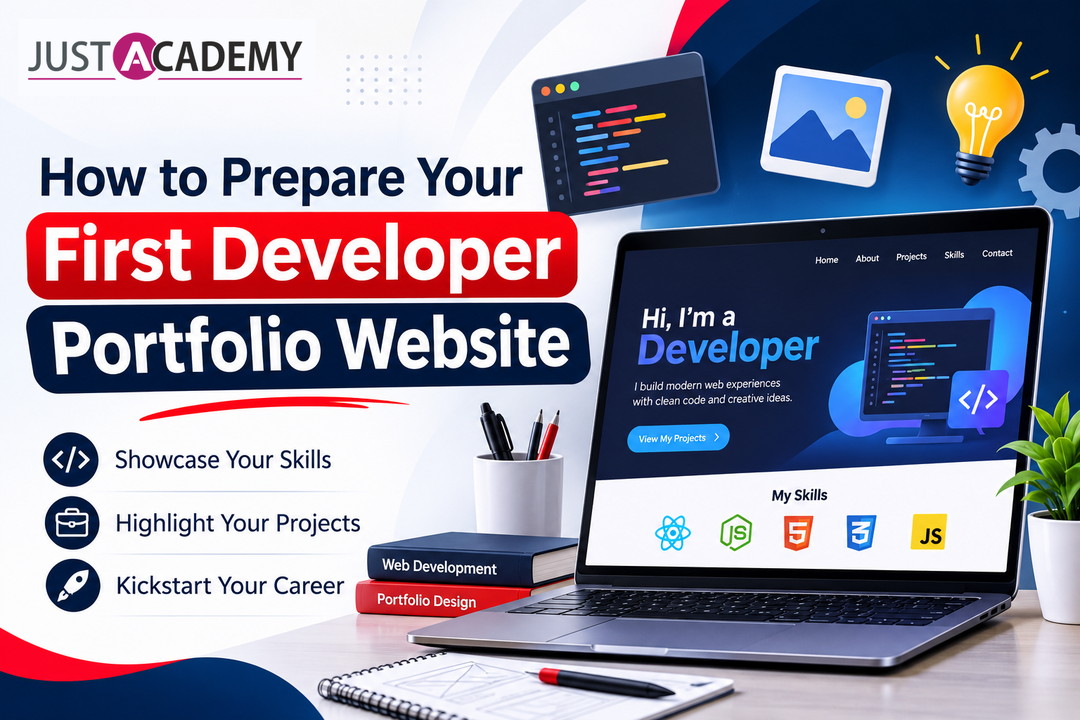
Every fresher in Hyderabad hits the same wall somewhere around the third month of preparation. The tutorials are finished, a few small apps are sitting in a folder, the resume has been polished twice, and still the replies are slow. Somewhere between scrolling through HITEC City job posts and chatting with friends who work in Gachibowli startups, you realise that a resume only claims things, while a developer portfolio website actually shows them. If you have been looking for website portfolio ideas that feel practical instead of copy pasted, this guide is written for you, and it walks through the whole journey from the first blank folder to a live page you are happy to share with a stranger.
A quick word about how this guide is shaped. It comes from the way we teach at JustAcademy, an ISO certified training institute whose classroom campus is in Mumbai, while learners from Hyderabad and the rest of India join the very same live interactive sessions online, with instructor led classes and mentor led review on top. If you would like a structured path that ends with real projects on your page, have a look at the MERN Stack Developer Bootcamp in Hyderabad with placement support, or simply register for a free demo session and see how a live class feels before you decide anything.
Here is what we will cover. We will talk about why recruiters judge you in seconds, how to choose a direction, how to plan pages on paper, how to design without looking like a template, which tools to pick, what projects deserve space, how to write the words that sit around your code, how to make the site findable, and how to finish the whole thing in four weeks. Nothing here needs a fancy degree or an expensive laptop. It needs patience, a little taste, and the habit of showing your work to other people before you feel ready.
Why Hyderabad Recruiters Open Your Portfolio Before Your Resume
The Ten Second Test Every Hiring Manager Runs
Picture a hiring manager at a product company in Madhapur. She has forty applications open, a standup in twenty minutes, and a quiet hope that one of those forty people can actually build things. She does not read your resume line by line. She scans for a link, clicks it, and watches what happens in the first ten seconds. Does the page load quickly? Does it tell her who you are without making her hunt? Does it look cared for? Those ten seconds decide whether she keeps reading or closes the tab.
That is the quiet power of a good personal portfolio. It lets you control the first impression instead of leaving it to a PDF that looks like a thousand other PDFs. A resume says you know JavaScript. A portfolio lets her scroll, tap a button, resize the window and see that the layout holds together. It turns a claim into evidence, and evidence is the only currency that moves a shortlist forward.
What a Personal Portfolio Proves That a Degree Cannot
A degree tells people you completed a programme. It does not tell them whether you can take a vague idea, break it into screens, write the code, fix the bugs and ship something. A software developer portfolio does exactly that. When someone opens your page and sees three working projects with short, honest write ups, they learn about your judgement, your taste, your persistence and your communication, all in one sitting.
There is also a confidence benefit that people rarely mention. Building a portfolio forces you to finish things. Half built projects live comfortably in a folder forever, but a project on a public page demands a clear description, a working link and a clean repository. The act of preparing it for strangers makes you a better developer, long before a recruiter ever looks.
The Many Names People Use When They Search for Portfolios
One small thing worth understanding early is how differently people describe the same idea. Some learners search for a dev portfolio, others type web dev portfolio site, programmer portfolio site, portfolio webdeveloper or even front developer portfolio and portfolio web programmer, usually in a hurry and usually on a phone. Hiring managers, on the other hand, say web portfolio developer or website portfolio developer when they ask a colleague for examples. Clients searching for a freelancer might type web developer website or best web developer websites.
You do not need to memorise any of this, but it explains why your own page should use clear, plain language about what you do. A line such as full stack developer portfolio for a Hyderabad based fresher is useful both to a human reader and to the search engines and AI assistants that increasingly summarise people. We will come back to this when we reach discoverability, because a portfolio that cannot be found is only half a portfolio.
Choosing a Direction Before You Choose a Colour
Front End, Back End or Full Stack: Pick a Story
Most beginners open a code editor and start with the colour palette, which is exactly backwards. The first decision is the story. Are you presenting yourself as a front end web developer, a back end specialist, or someone who can handle the whole stack? Each story changes what the page needs to prove. A front end developer portfolio lives or dies on polish, responsiveness and interaction. A back end story needs architecture notes, API design and database thinking. A fullstack developer portfolio needs both, and needs them connected, so a visitor can see a screen and then read how the data behind it flows.
If you are unsure, choose the story that matches the jobs you keep bookmarking. Open ten postings that excite you and look at the verbs they use. Companies hiring for a portfolio for front end developer roles talk about components, accessibility and performance. Companies hiring generalists talk about ownership and shipping. Let the market nudge you, then commit for the next three months. You can always widen the story later.
Writing a Positioning Line You Can Say Out Loud
Before any design work, write one sentence that says who you are and what you build. Something like, I am a front end developer in Hyderabad who builds fast, accessible interfaces with React, and I am looking for my first product team role. Read it aloud. If it sounds like a LinkedIn cliché, rewrite it until it sounds like you speaking to a friend. This sentence becomes the headline on your homepage, the first line of your bio, the opening of your cover note and the answer to the dreaded tell me about yourself question.
A good positioning line is specific enough to be remembered and humble enough to be believed. Avoid empty words such as passionate, hardworking and results driven. Every candidate uses them, so they carry no information. Name a technology, a kind of problem and a city if it helps. Specific beats impressive almost every time.
Matching the Portfolio to the Role You Want
A portfolio for a software engineer applying to a product startup should look different from the page of someone applying to a services company or a design heavy agency. The startup reader wants to see initiative, small shipped products and clear thinking about trade offs. The services recruiter wants to see breadth, reliability and the ability to learn a new tool quickly. An agency wants visual sensitivity. None of these is better than the others, but a single generic page rarely impresses any of them.
The practical move is to keep one core site and adjust the project order, the headline and the featured case study for each application. It takes ten minutes and signals that you read the job description. Over months, that habit separates people who get interviews from people who simply send links.
Planning Website Portfolio Ideas on Paper First
A Five Page Map That Covers Everything
Most strong examples of a portfolio website development effort are surprisingly small. You do not need twelve pages and a blog on day one. Five sections are enough: a home page with your positioning line, a projects page, a single project detail template, an about page, and a contact section. That is the full skeleton of a web developer portfolio website, and it is easy to keep updated, which matters more than people think. An outdated sprawling site looks worse than a tidy small one.
Draw this map on paper, with boxes for each page and arrows for how a visitor moves between them. Ask what a hiring manager wants to find in the first screen, what a founder looking for a freelancer wants to find, and what a senior engineer wants to find before agreeing to a referral. If you can answer those three questions, your structure is already ahead of most of the best personal websites you will see on social media.
Taking a Content Inventory Before Writing Code
Code is the fun part, so people rush towards it. Slow down and collect your raw material first. List every project you have built, including college assignments and tutorial extensions. List the screenshots you can take, the live links you can restore, the technologies each project used, and one honest sentence about what went wrong and what you learned. List certificates, internship notes and any small open source contributions, even a documentation fix.
This inventory usually surprises people. Learners who believed they had nothing discover six projects, two of which are genuinely interesting. It also reveals gaps. If every project is a to do list, you will notice the sameness and decide to build something different. That decision, made on paper in an evening, saves weeks of unfocused coding.
Website Portfolio Ideas That Feel Personal Without Being Gimmicky
There is a temptation to turn the page into a game, a terminal, a three dimensional room or a spaceship. A few people pull this off beautifully. Most produce a slow, confusing page that hides the actual projects. A better source of website portfolio ideas is your own life and interests. A learner who loves cricket might frame project case studies as innings reviews. Someone who cooks might add a small recipe API to show backend skills. A person from a family of weavers in Pochampally might build a catalogue showcase that tells a real story.
The test for any idea is simple. Does it make the work easier to understand, or harder? If a visitor needs instructions to navigate your page, simplify it. Personality should live in your words, your project choices and a few well judged details, not in a maze. Many of the great web developer portfolios that recruiters remember are quiet, fast and clear, with one memorable touch that feels like the person behind them.
Designing a Personal Portfolio Without Looking Like a Template
Wireframing in Figma Before You Touch Code
Design is where many developers freeze, because they believe it needs talent they do not have. It needs process more than talent. Open a free design tool, draw a rectangle the size of a laptop screen and another the size of a phone, and place the same content in each. Header, headline, a row of projects, a short bio, a contact button. That rough wireframe takes an hour and answers most of the layout questions that would otherwise eat your coding time.
Figma is the tool most teams in Hyderabad actually use for this, and learning its basics, frames, auto layout, components and simple prototypes, gives you a second skill that employers quietly love. If you want guided practice rather than random videos, the Figma training in Hyderabad programme covers exactly this kind of workflow in live classes, with an instructor correcting your layouts as you build them.
Typography, Colour and Spacing That Feel Calm
Good design for a personal website design project rarely comes from clever tricks. It comes from restraint. Choose one readable typeface for body text and, if you like, one more for headings. Pick a main colour, a neutral background, and one accent for links and buttons. Then use generous spacing. Most amateur portfolios feel cramped, and simply doubling the white space around your sections can make a page look professionally designed.
Pay attention to contrast. Light grey text on a white background looks stylish on a design blog and is painful to read on a phone in sunlight. Test your colours with any free contrast checker. Keep line lengths comfortable, around sixty to eighty characters, and avoid centring long paragraphs. These small decisions are what people mean when they say a site feels clean, and clean sites tend to appear in lists of the best portfolio websites for web developers.
Accessibility and Mobile First Thinking
Recruiters in India very often open links on their phones, between meetings, or while commuting on the metro. If your page breaks on a small screen, you may never learn why the reply never came. Design the mobile layout first, then expand it for tablets and desktops. Make tap targets large, keep navigation simple, and avoid hover only interactions that do not exist on touch screens.
Accessibility is part of the same habit. Use real headings in a sensible order, write meaningful alt text for images, make sure every interactive element works with a keyboard, and label form fields properly. These are exactly the details that interviewers probe when they ask about front end quality, and a portfolio that quietly gets them right is a strong sample web developer portfolio for others to study.
Picking Tools and Stacks That Match Your Goals
Plain HTML, CSS and JavaScript Are Still Respectable
Beginners often assume a serious portfolio must be built with the newest framework. That is not true. A hand written page with clean HTML, thoughtful CSS and a little JavaScript is fast, easy to host and impossible to break with a dependency update. It also proves something valuable: that you understand the fundamentals instead of hiding behind tooling. For many entry level roles, that is exactly the signal a hiring panel wants.
If your JavaScript feels shaky, fix that before decorating anything. Closures, the DOM, events, asynchronous code and fetch calls show up in almost every interview and inside almost every portfolio feature. A focused option is the JavaScript training in Hyderabad course, which keeps the sessions live and interactive so doubts get answered while they are still fresh in your head.
When React, Vue or Angular Earn Their Place
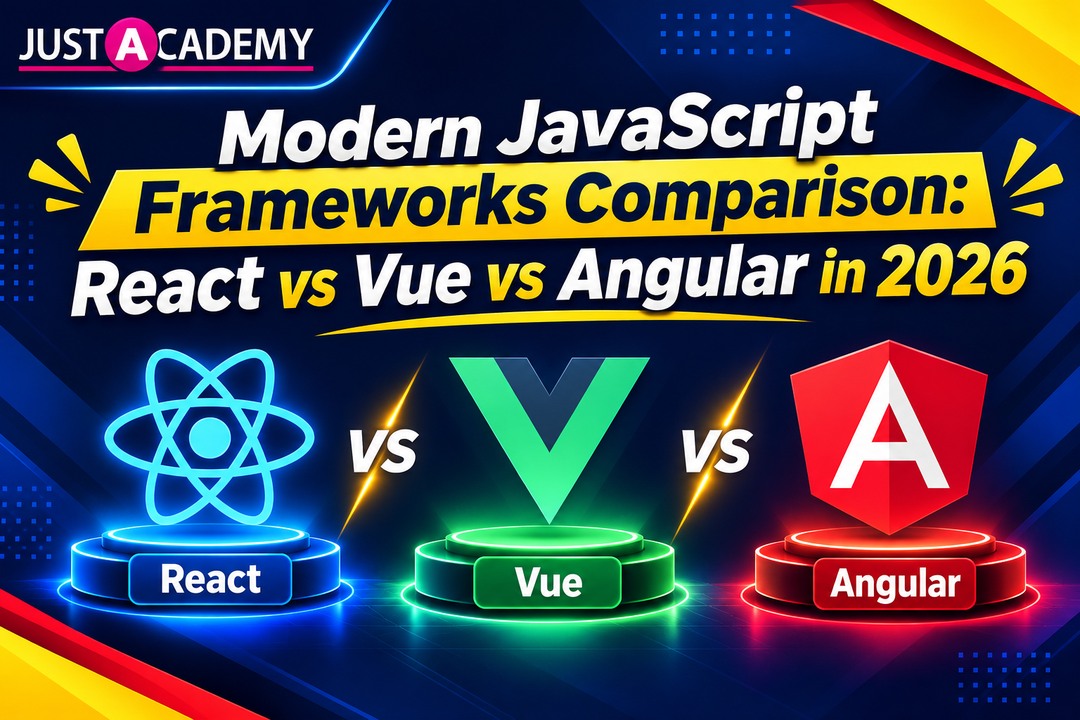
Frameworks become sensible when your site has repeated components, shared state or data that changes. A projects page generated from a list, a filter that updates results, a theme toggle that remembers its setting, a blog that pulls posts from an API, these all feel natural in React. If you are not sure which framework suits you, our detailed breakdown of how React, Vue and Angular compare in 2026 will help you choose without getting lost in online arguments.
Whatever you pick, resist the urge to use three frameworks because you want to look versatile. One tool used well, with clean structure, readable components and sensible folder names, tells a better story than a pile of half learned tools. Depth is more persuasive than breadth at the portfolio stage.
Hosting, Domains and Deployment on a Budget
Getting your site live costs almost nothing. Free static hosting from several providers will serve a portfolio reliably, and connecting a repository to a host means every push updates the live page automatically. That single habit, version control plus continuous deployment, is something you can mention proudly in interviews because it mirrors how real teams work.
Spend a small amount on a custom domain. A web address that is simply your name, or your name with the word dev, looks far more professional than a long default subdomain, and it will stay with you across jobs. Set up a matching email address as well. It is a tiny detail that makes applications look organised.
Approach
Best for
Strength
Watch out for
Plain HTML, CSS and JavaScript
Absolute beginners and front end starters
Fast, simple, proves fundamentals
Repetition grows as pages multiply
React with a static host
Learners targeting product company roles
Reusable components, strong interview relevance
Over engineering a five page site
Vue or Angular
Learners aiming at teams that already use them
Structured patterns, clear conventions
Heavier learning curve for a small site
MERN with a live backend
Full stack and job ready candidates
Shows end to end ownership with real data
Free hosting limits and cold start delays
Site builder or template
Quick personal pages for non developers
Speed and zero setup
Does not prove coding ability
Projects That Deserve a Place on Your Page
Web Developer Portfolio Examples Worth Studying
Before you build, look at how others present their work. Spend an evening browsing web developer portfolio examples, noting what makes you stay and what makes you leave. Nearly every memorable site shares a few traits: a clear headline, three to five carefully chosen projects, screenshots that show real functionality, and short descriptions that explain the problem before the technology. Many of the web developer portfolio site examples that get shared among developers are not flashy at all, they are simply honest and easy to navigate.
Treat this like research, not shopping. Make a small document with columns for what you liked, what annoyed you and what you could adapt in your own way. A good example of web developer portfolio structure is a lesson, not a template to clone. Copying someone else's layout wholesale is easy for recruiters to spot, and it weakens the one thing a portfolio should prove, which is that you can think for yourself.
Web Developer Portfolio Examples You Can Build in Four Weeks
Now for the useful part. Here are the kinds of projects that work well on a first page, described in prose so you can adapt them. A weather or city dashboard that pulls live data shows API handling. A task manager with login, saved lists and filters shows full stack basics. A small ecommerce storefront with a cart and checkout flow shows state management and thoughtful interface design. A Hyderabad specific tool, perhaps a metro route helper, a biryani place finder or a local events board, shows initiative and local relevance, which hiring managers in the city genuinely enjoy seeing.
Aim for three finished projects rather than eight unfinished ones. One simple, one moderately complex and one ambitious is a lovely mix. The simple project shows you can finish. The moderate one shows craft. The ambitious one shows you can stretch. For every project, include a live link, a repository link, a short description of the problem, your role, the stack, and one lesson learned. That last item is where your personality shows.
Backend and Python Projects That Add Depth
If you want your site to read as a full stack developer portfolio, at least one project should feature a proper backend. An API with authentication, a database with sensible relationships, input validation and error handling, plus documentation that explains how to run it, immediately lifts the whole page. Python is a friendly language for this, and it also opens doors into automation, data work and scripting, which gives your portfolio a second dimension beyond web pages.
Learners who want a guided route into this can look at the Python training in Hyderabad course, where mentors review your code the way a team lead would. Even if you learn on your own, borrow that habit: ask someone more experienced to read your pull requests and tell you honestly what feels clumsy.
MERN Projects That Look Like Real Products
The MERN stack, MongoDB, Express, React and Node, remains one of the most practical ways to build a project that behaves like a real product. A job board, a booking system, a small social feed or an expense tracker with charts gives you login, database storage, protected routes and a polished interface in one package. If you are hunting for specific directions, this list of MERN stack project ideas for job ready developers is a good place to start, and it explains which features recruiters actually test in interviews.
When you present a MERN project, write briefly about the decisions behind it. Why this schema? How did you handle authentication? What would you change with more time? A sentence or two on trade offs does more for your credibility than a long list of buzzwords. It also gives interviewers something real to discuss, which is exactly what you want.
Stuck on which project to build first, or unsure whether your current work is good enough to show? Sit in on a live class and ask. You can book a free demo session and bring your questions, or grab the course brochure to see how projects are woven into the curriculum.
Words, Proof and Personality: The Writing Side of Portfolio Work
An About Page That Sounds Like a Person
Developers often write their bio as if filing a government form. Born in this city, studied this degree, passionate about technology. It is dull, and it hides the most interesting thing about you, which is how you think. Write three short paragraphs instead. The first says what you build and who for. The second tells a small story about how you got into code, perhaps a first website for a cousin's shop or a bug that kept you awake. The third says what you are looking for now and how to reach you.
Keep the tone warm and direct, and include one detail that has nothing to do with work. A love for filter coffee, a weekend cricket habit, a chess rating. People hire people, and a human detail makes you easier to remember when the shortlist meeting happens without you in the room.
Project Write Ups That Read Like Case Studies
A screenshot with a title is a caption, not a case study. A good write up follows a simple arc. State the problem in plain words, explain your approach, show the result, and be honest about what you would improve. If you used a particular pattern, such as debouncing a search box or caching an API response, describe it in a sentence a non technical manager could follow.
Design learners should go further and show process, sketches, wireframes and the reasoning behind changes. If your path leans towards interfaces, it helps to understand what interviewers ask about design decisions, and the guide on Figma interview questions and design skills recruiters expect gives a useful picture of that conversation. Developers who can explain a layout choice are rarer than you might think.
Keeping Your Resume, GitHub and LinkedIn in Agreement
Your portfolio does not live alone. A recruiter will often open your GitHub and LinkedIn within minutes, and any mismatch creates doubt. Make sure project names, descriptions and dates line up. Pin your best repositories, write clear readme files with setup instructions and screenshots, and keep your commit history looking like a real working habit rather than one giant upload.
On LinkedIn, mirror your positioning line in the headline and link directly to your portfolio in the featured section. This small bit of consistency makes your personal web portfolio feel like the centre of a well organised professional presence, not a lonely page floating in the void.
Making Your Portfolio Easy to Find for Search, AI and Local Hiring
Technical Basics That Search Engines Quietly Reward
Many of the developer portfolio sites that rank well for a person's own name are not especially complicated. They have a descriptive page title, a clear meta description, sensible headings, fast loading images, clean URLs and a sitemap. Give your homepage a title such as your name followed by what you do and where you are based. Write a meta description that reads like a human sentence. Compress images, use modern formats and avoid loading heavy libraries that you barely use.
Performance is part of this story too. A slow personal portfolio page is a small tragedy, because the one thing it must prove, that you care about quality, is contradicted in the first second. Run the page through a free performance and accessibility audit, fix the biggest warnings, and mention the improved scores in your project notes. It is a surprisingly good talking point in interviews.
Writing for AI Summaries and Answer Engines
More people now ask an assistant to find or summarise a candidate, which means your page is being read by machines as well as people. Help them by being plain and structured. Use headings that describe what follows, state your role and skills in complete sentences, and avoid hiding important facts inside images or animations. A short paragraph near the top that says who you are, which stack you use and what kind of work you are seeking gives AI tools a quotable summary.
Adding structured data about yourself, such as a person schema with your name, job title and links, helps further. None of this is magic, and none of it replaces good work, but it increases the chance that a software developer portfolio site appears accurately when someone searches for talent. Think of it as writing a clear label on a well made product.
Local Signals for Hyderabad Hiring Managers
Hyderabad has one of the densest tech hiring scenes in the country, and local context counts. Mention the city on your page, mention that you are open to roles in Hyderabad, hybrid setups or remote work, and join local developer communities and meetups where people share links. A recruiter searching for a best portfolio web developer in the city is far more likely to find someone who states their location clearly than someone who stays vague.
If you have a Hyderabad flavoured project, say so in its description. A civic data dashboard, a local services directory or a campus placement tracker gives your website portfolio web developer story a sense of place. It also gives local interviewers an easy and friendly opening question, which is half of what you want from any interview.
Common Mistakes That Quietly Weaken a Portfolio
Copying Layouts Instead of Learning From Them
Most learners begin by collecting personal website examples, which is healthy until the collecting replaces the building. Screenshots pile up, tabs multiply, and a month later the folder of inspiration is bigger than the folder of code. Set a deadline for research. When you finally sit down to design a personal website, borrow principles such as spacing, hierarchy and honest copy, not pixels. Studying web developer portfolio website examples is only useful when you write down what you will do differently.
Another common trap is chasing web dev portfolio ideas that look dazzling in a short video but collapse on a mid range phone. A front end web developer portfolio should feel effortless, and a front end web dev portfolio that stutters while scrolling undermines its own message. In the same way, a portfolio website for web developer roles does not need particle effects. It needs readable text, working links and a clear route to contact.
Overbuilding the Container and Underexplaining the Work
Some people treat the page as a gallery and forget the story. Whether you are creating a portfolio for a web developer applying to startups or a portfolio for software engineer roles in larger companies, the content matters more than the container. A website development portfolio should explain decisions, a software development portfolio should show structure and testing habits, and a web design personal portfolio should show process. Even a portfolio of software developer work from college can impress when it is documented well.
Naming trips people up as well. A portfolio of software engineer projects labelled project one, project two and project three tells the reader nothing, so give each piece a meaningful title and group similar work together. A software engineer portfolio site that separates web apps, scripts and experiments is far easier to scan than one long unsorted grid, and a personal portfolio site with sensible grouping respects the visitor's time. When people browse portfolio websites web developer teams admire, the ones they remember are usually the easiest to read, and good personal portfolio design is mostly about making reading easy.
Finally, resist the urge to compare your first attempt with a polished sample portfolio of web developer work from someone with ten years of experience. Your goal is not to match their depth. Your goal is a credible, honest page that improves every month, and web dev portfolios that keep improving are exactly the ones that eventually look effortless. A thoughtful personal portfolio website design that is finished and live always beats a perfect one that never leaves your head.
A Four Week Build Plan You Can Start This Weekend
Week One: Direction, Content and Wireframes
Spend the first week without writing much code. Choose your story, write your positioning line, complete the content inventory and sketch the five page map. Collect screenshots and write rough descriptions of your best projects. Create low fidelity wireframes for desktop and mobile, and show them to at least two people, ideally one developer and one friend who knows nothing about tech. Their confusion is valuable data.
If you are working alone, set small daily goals and track them somewhere visible. Many learners fail not because the work is hard but because it is vague. Progress that fits on a sticky note, such as finish the hero section or write the first case study, keeps motivation alive far better than a heroic weekend plan that collapses by Tuesday.
Weeks Two and Three: Build, Test and Improve
Now the building begins. Start with structure and content, then add styling, then interaction. Commit often with meaningful messages. Test on a real phone and in at least two browsers. Ask a friend to try finding your best project in under thirty seconds, and watch where they hesitate without helping. Every hesitation is a design fix waiting to happen.
Use the third week to finish the second and third project write ups, tighten the copy and fix accessibility issues. This is also the moment to polish your repositories, adding readmes, screenshots and clear setup steps. A neat repository is a small portfolio in itself, and plenty of interviewers click through to it before they ask a single question.
Week Four: Launch, Share and Collect Feedback
Deploy the site, connect your domain, set up analytics that respect privacy and double check every link. Then share it. Post it with a short, honest note about what you built and what you learned. Send it to mentors, seniors and friends working in companies you admire, and ask for one specific piece of feedback, not a vague opinion. People answer precise questions far more often.
Treat the launch as the beginning of a loop, not the end of a task. Update the site after every new project, review the copy each month, and keep a small changelog for yourself. A living portfolio signals a living career, and recruiters notice when a page has not changed in two years.
Why Live Interactive and Mentor Led Training Shortens the Journey
Live Interactive Sessions Beat Passive Videos
Recorded tutorials are wonderful for getting started and terrible for getting unstuck. When your layout collapses at midnight or your API refuses to connect, a video cannot look at your screen. Live interactive sessions can. At JustAcademy, classes are built around live interactive training where you can ask questions in the moment, share your screen and watch an instructor debug in real time. That habit of watching someone think through a problem is something you cannot get from a paused video.
It also keeps you accountable. A scheduled class with other learners turns portfolio building from a lonely, postponed hobby into a weekly rhythm. You show up, you build, you present, and the feedback loop that makes people improve finally starts turning.
Instructor Led Teaching and Mentor Led Review Work Together
An instructor led session teaches concepts in a structured order, so you are not left to guess whether you should learn a framework before understanding the browser. A mentor led session does something different. It reviews your actual work, your actual code and your actual portfolio, and tells you what a hiring manager would say. Both matter, and they reinforce each other. The instructor gives you the map, the mentor walks beside you on the road.
The difference is often visible within weeks. Learners who receive regular code reviews write cleaner components, name things better, explain trade offs more clearly and rewrite their portfolio copy with more confidence. Those are exactly the traits that move a candidate from average to memorable in a short interview.
Mumbai Classroom Training and Online Learning for Hyderabad Students
JustAcademy has an offline institute in Mumbai, with classroom batches and a branch in Pune, and many people consider it among the best course in Mumbai options for hands on tech training. For learners in Hyderabad, the same teaching quality is available through live online batches, with the same instructors, the same projects and the same review culture. You do not need to relocate. You need a stable connection, a laptop and the discipline to show up.
If your goal is a job ready, full stack profile, the MERN bootcamp for Hyderabad learners is built around real projects that you can place straight into your portfolio, supported by interview preparation and placement support.
Placement Support and Portfolio Reviews
Training only matters if it connects to opportunities. That is why portfolio reviews, mock interviews, resume feedback and placement support sit at the heart of a good programme. A mentor who has seen hundreds of student portfolios can tell you in five minutes which project to lead with and which to remove. That kind of editing is difficult to do yourself, because you are too close to the work.
Factor
Learning alone
Live interactive, instructor and mentor led training
Getting unstuck
Search forums and wait for replies
Ask in the moment and watch the fix happen
Learning order
Guesswork and scattered tutorials
Structured path from fundamentals to projects
Feedback on your portfolio
Friends who may not know what to look for
Reviews from mentors who understand hiring
Accountability
Easy to postpone
Scheduled sessions and peer momentum
Career support
Self managed applications
Interview preparation and placement support
Quick Answers to Questions Learners Ask Most
How many projects should my first developer portfolio website include?
Three well finished projects are better than eight rough ones. Include one simple project, one moderate project and one ambitious project, each with a live link, a repository and a short case study. If you can only complete two before applying, publish two and keep building the third in public.
Do I need to know React before building a portfolio?
No. Plain HTML, CSS and JavaScript are enough to create a convincing personal portfolio website. React becomes useful when your site has reusable components or changing data. Learn the fundamentals first, then decide whether a framework truly improves your site.
Should I use a template or build everything from scratch?
You may start from a template to learn structure, but customise it deeply and rewrite the content. A site that is obviously unchanged from a popular template does not prove your skills. Building the layout yourself, even in a simple style, is a stronger signal.
How often should I update my portfolio?
Review it monthly and update it after every meaningful project. Remove outdated work, fix broken links and refresh your positioning line as your goals change. A maintained page tells recruiters you take your craft seriously.
Can I build a strong portfolio while learning online from Hyderabad?
Yes. With live interactive sessions, mentor reviews and real projects, online learners build portfolios that are just as strong as classroom learners. What matters is consistency, feedback and finishing projects publicly.
Conclusion
Building your first developer portfolio website is less about technical wizardry and more about clarity, honesty and finishing what you start. Choose a direction, plan on paper, design with restraint, pick tools that fit your goals, showcase a few projects with thoughtful write ups, make the site easy to find, and launch within a month. Do that, and you will have something far more persuasive than any resume line, a living proof of how you think and what you can build.
You do not have to walk this road alone. With live interactive sessions, instructor led teaching, mentor led reviews and placement support, structured training can shorten months of confusion into weeks of focused progress. Take the next step today.
Ready to build a portfolio that gets you shortlisted?Register for your free demo class and experience a live interactive session, or download the brochure to explore courses, bootcamps and placement support in detail.
Why Hyderabad Recruiters Open Your Portfolio Before Your Resume
Planning Website Portfolio Ideas on Paper First
Projects That Deserve a Place on Your Page
Why Live Interactive and Mentor Led Training Shortens the Journey
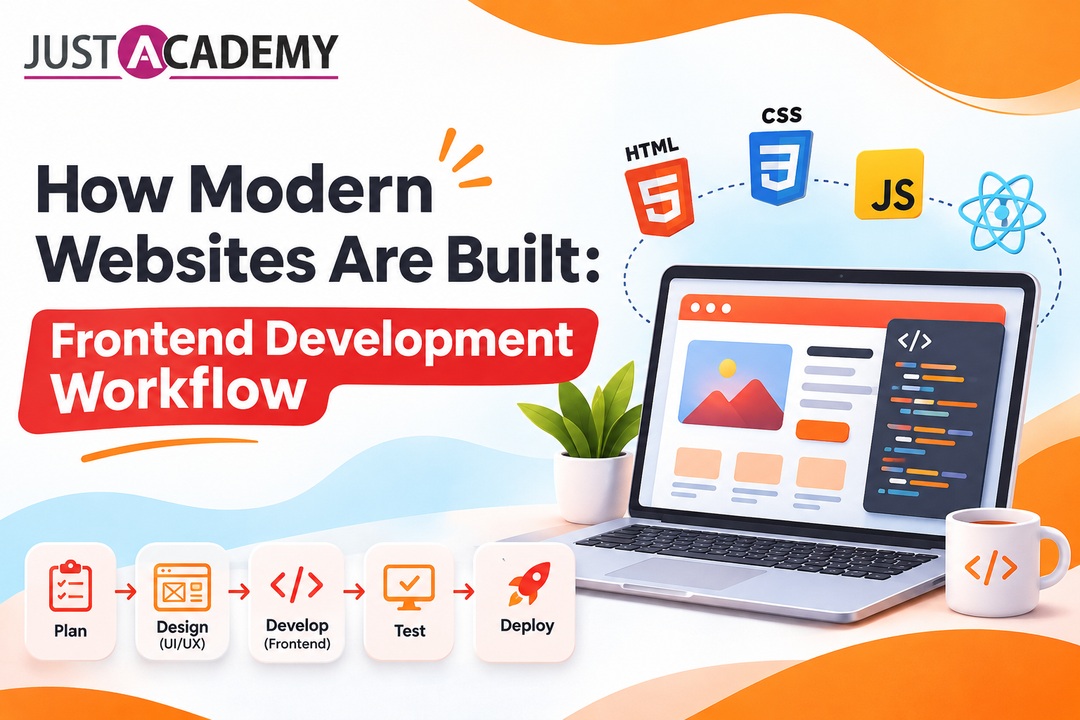
A practical walk through every stage of website development, written for Hyderabad learners who want to think and code like working front end engineers
A mentor style breakdown of React, Vue and Angular for Hyderabad learners, covering market share, hiring demand, learning curve and the smartest way to train.
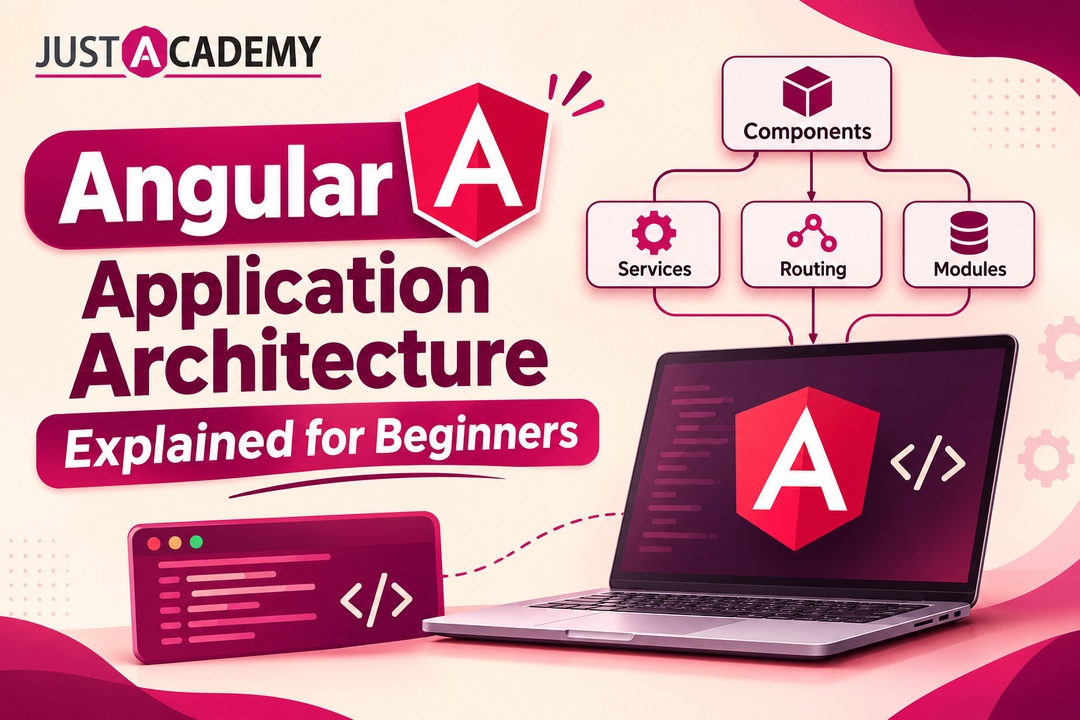
How components, services, standalone building blocks and the Angular CLI fit together, explained in plain words with live interactive and mentor led learning in mind
A practical guide for Hyderabad developers to react hooks, custom hooks and the design patterns that keep real projects clean, taught through live interactive, instructor led and mentor led learning
A practical, honest guide to choosing your first language, understanding modern iOS development, and building a career in Hyderabad’s growing app ecosystem through live interactive, instructor led and mentor led training.
A Hyderabad friendly walkthrough of how real apps get planned, designed, built, tested and shipped, and how live interactive, instructor led and mentor led learning gets you there faster
A grounded, honest guide for Hyderabad learners, career switchers and business owners who want to build real apps with Flutter and learn from mentors, not just videos.
Forty questions, honest answers and the design skills hiring panels in Delhi quietly score, shaped around live interactive, instructor led and mentor led learning
Drop us a Query
+91 99871 84296
Available 24x7 for your queries
Want To Connect with us
🚀 Kickstart Your IT Career
with JustAcademy
Learn Industry-Focused Courses with Live Projects & Placement Assistance
Full Stack Java(Java, Spring Boot, Hibernate, REST API, React JS)
Data Analytics(Excel, SQL, Power BI, Python, Tableau)